Cosmic Smash Booking
Cosmic Smash Booking
How would it feel to truly let go?
To be boundless, limitless, and free from rules?
To embrace your creativity fully and unapologetically be 100% yourself?
Leave your inner critic and judgment at the door. Welcome your inner muse with open arms. Step into the transformative world of Cosmic Smash Booking and discover the joy of unbridled self-expression!
Discover the Transformative Power of Cosmic Smash Booking
Cosmic Smash Booking, created by Catt Geller, is an innovative practice that seamlessly combines writing and art journaling to create a powerful portal for connecting with your inner wisdom. Rooted in the Intentional Creativity process founded by Shiloh Sophia McCloud and her mentor Sue Hoyer, Cosmic Smash Booking offers a versatile approach to life’s challenges and transitions—whether you’re discovering a new calling, overcoming obstacles, deepening self-awareness, or releasing old narratives that no longer serve you.
Using simple art supplies and techniques like painting, drawing, and collage, this practice helps you create a daily self-care ritual that nurtures your creativity and personal growth.
Escape the clutches of perfectionism, silence your inner critic, and release stress as you invite your creative muse to play. Cosmic Smash Booking is a joyful and liberating process that enhances your connection with your inner truth, intuition, and wisdom—no prior artistic experience required.
My journey with Cosmic Smash Booking began in 2016 at the Women Unleashed Retreat with Amber Kuileimailani Bonnici. Guided by Catt Geller, I fell in love with the transformative power of this practice. Inspired by its impact, I became a Certified Cosmic Smash Book Guide, combining therapeutic techniques with intuitive creativity to empower others on their journey of self-discovery.
With nothing more than a simple composition notebook, you can engage your senses, embrace the messiness of creation, and transform your notebook into a sacred space for self-connection. Each page becomes a canvas for exploring your external and internal worlds, weaving together a beautiful narrative that fosters new insights and perspectives.
Cosmic Smash Booking invites you to break free from expectations, embrace your creative flow, and transform how you respond to life’s challenges—unlocking a deeper connection to yourself and your limitless potential.
I offer virtual Cosmic Smash booking workshops and courses, one-on-one private Cosmic Smash Booking coaching sessions, and can incorporate cosmic smash booking into customized health and wellness and coaching plans. If you're interested in hosting a workshop or private party, please reach out using the form below or by emailing me at [email protected]. Please check the Calendar of Events for upcoming Cosmic Smash Book workshops
Glowing Feedback
"I love that this is such a creative and positive archery and being connected to all the lovely ladies I met. I will certainly continue this. Move to Vermont so we can meet for smashing on a regular basis."
Deb
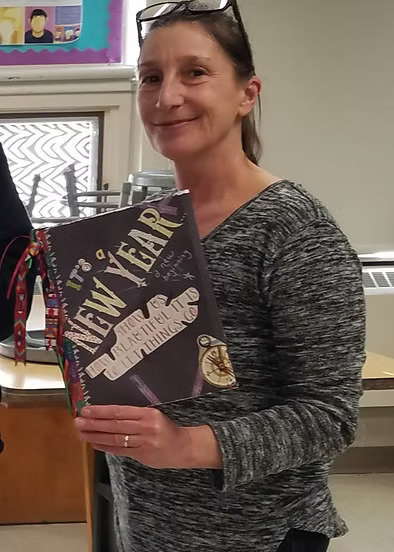
"I had no idea how creative this project would be. It allows you to be as crazy as possible in the artwork comes out amazing!"
Katie Bernacle
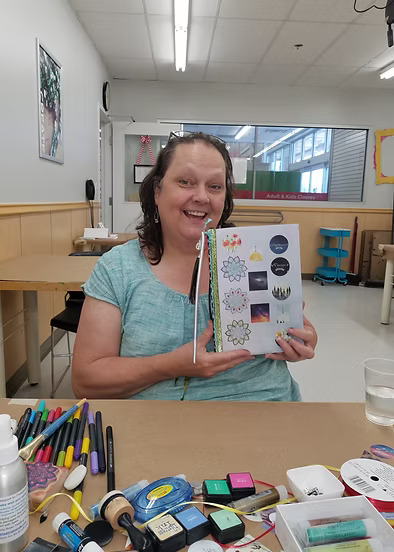
"It was very liberating to spend an hour with very few rules and just see what inspired us to experiment."
Shannon and Susan F
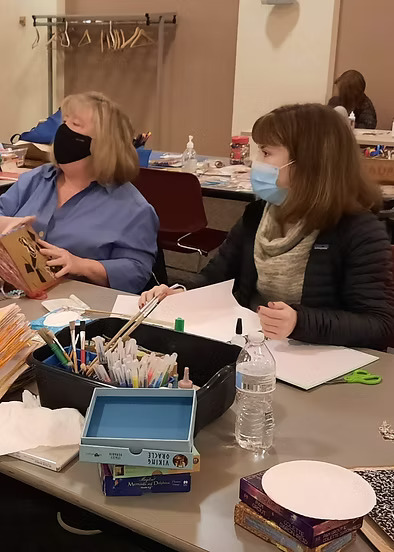


Lana Read
"Not only has Isabella been an amazing teacher, she's become a friend. Her caring and courageous heart is almost as infectious as her smile and laugh. Thanks so much for the opportunity and introduction to smash booking. It was a lot of fun and will continue with it long after the class is over."
E. P.
"I love the fact that anything was okay to put in the book and make. All styles were accepted even glitter!"
J. B.
"This workshop made me realize I was really missing the spontaneous creativity in my life, thank you!"
Lana Read
"Not only has Isabella been an amazing teacher, she's become a friend. Her caring and courageous heart is almost as infectious as her smile and laugh. Thanks so much for the opportunity and introduction to smash booking. It was a lot of fun and will continue with it long after the class is over."
E. P.
"I love the fact that anything was okay to put in the book and make. All styles were accepted even glitter!"
J. B.
"This workshop made me realize I was really missing the spontaneous creativity in my life, thank you!"
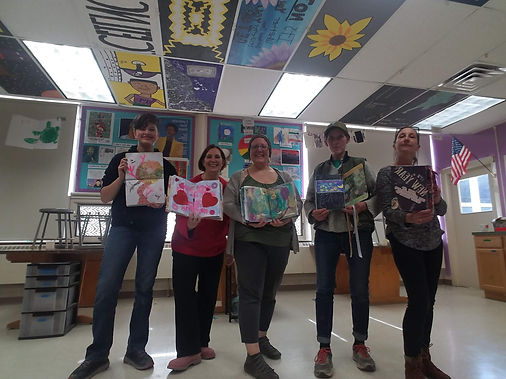
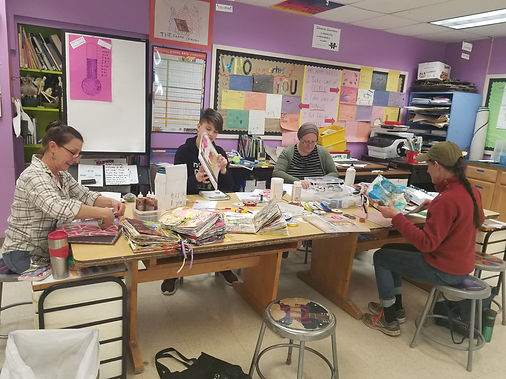
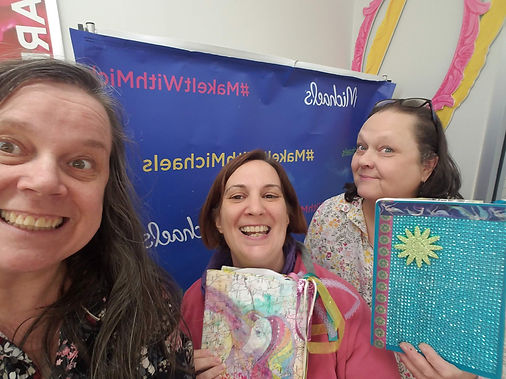
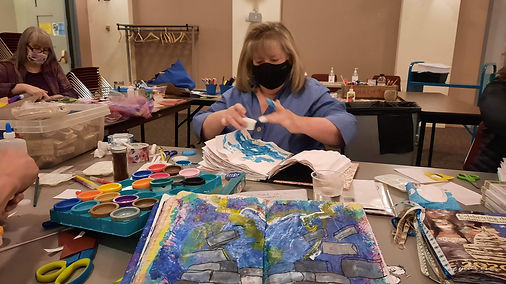
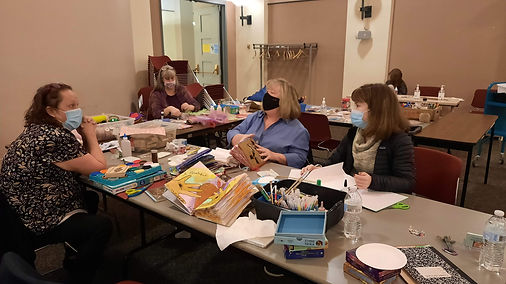
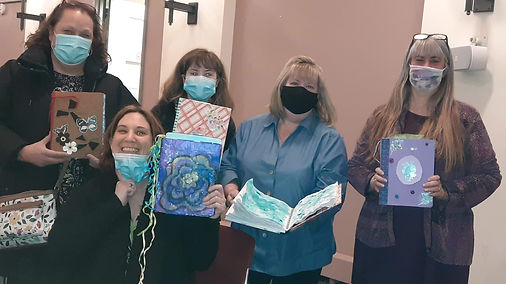
Artful Connections:
Cosmic Smash Booking Highlights
1 / 6
Blog
Body and Disability Shame: A Journey Toward Acceptance
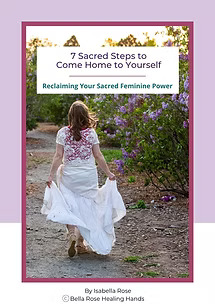
Butterfly on a padlock at sunset, with text "Body and Disability Shame: A Journey Toward Acceptance." Warm colors, tree silhouette.
For what seems like the longest time—almost two years now—I've carried a weight that has nothing to do with my physical limitations and everything to do with how I see myself. I've been ashamed of being homebound, ashamed of the way my body has changed since the car accident, and ashamed of the person I've become in the aftermath of trauma that rewrote my entire life.
This isn't my first battle with body shame, though it feels different this time. In my teens and early-twenties, I struggled with anorexia. It was the one thing I felt I had control over after being raped. Later, the pendulum swung the other way, and I found myself overweight, carrying shame about taking up too much space instead of too little. But somewhere along the way, I had done the work. I had found peace with my body. I had learned to love and accept all of myself.
That acceptance felt hard-won and permanent. I thought I was done with this particular struggle. But becoming homebound two years ago has brought me face-to-face with body shame all over again, and I'm having to relearn everything I thought I already knew.
The Cycle of Body Shame
Body shame, I've learned, isn't a problem you solve once and never face again. It's more like a recurring visitor that shows up at different life stages, wearing different masks. In my teens and twenties, it whispered that I was too much, that I needed to shrink myself down to nothing. When I recovered from anorexia, it later told me I was taking up too much space, that my worth was tied to the number on a scale.
I fought those battles and won. I did the therapy, the inner work, the painful process of learning to see my body as something other than an enemy. For years, I lived in that hard-earned peace, believing I had finally conquered this particular demon.
But trauma has a way of reshuffling everything you thought you knew about yourself. When my injuries left me homebound, body shame returned with a vengeance, wearing a new disguise. This time, it wasn't about size or shape—it was about capability, about the betrayal of a body that could no longer do what it once could.
The Invisibility of Pain
Living with invisible disabilities means existing in a strange liminal space. From the outside, I look okay. People can't see the internal scar tissue that affects my rib cage and diaphragm, making each breath a conscious effort. They can't see my cervical spine instability or the limited range of motion in my neck and shoulders that turns simple tasks into calculated movements. They can't see my restructured aorta or where my abdominal wall was torn through and repaired. They can't see the balance issues that make me unsteady on my feet, or how I can't sit comfortably in a car for more than eight minutes, or the other cascading effects that these lifelong car accident injuries have created throughout my body.
This invisibility becomes both a blessing and a curse. While I'm spared the visible markers that might invite unwanted pity or stares, I'm also left to navigate a world that doesn't understand why I can't do the things I once could. The absence of external evidence makes the internal reality feel somehow less valid, even to myself.
Having spent years learning to accept my body through various changes—from the skeletal thinness of anorexia to weight gain and back to a place of peace—I thought I understood body acceptance. But this feels different. This isn't about appearance or size; it's about function, about a body that has fundamentally changed its relationship with the world.
The Cushion of Caregiving
When my father was sick and I became his full-time caregiver, I had what felt like a socially acceptable reason to stay home. "I need to take care of my dad," I would say, and people understood. There was purpose in my homebound existence, a noble reason that made my limitations feel justified. Caregiving gave me cover for my own struggles, a way to explain my absence from the world without having to expose my vulnerabilities.
But cushions, by their very nature, are temporary.
The Grief of a Life Interrupted
Now that my father has passed, that protective explanation is gone, and I'm left facing the raw reality of my situation. Without the buffer of caregiving responsibilities, I've had to confront the shame I feel about my body and my limitations head-on. I've hated my car accident injuries with an intensity that surprises me. I've hated how they've stolen my mobility, my independence, my former life.
The grief became compounded in ways I hadn't anticipated. Not only was I dealing with the loss of my father, but I was also confronting the devastating reality that my injuries had left me unable to attend any of his funeral services. While my family gathered to say goodbye, I remained homebound, isolated in my grief. The stress of my family not understanding my limitations added another layer of pain to an already unbearable situation. In my upcoming book, I share more about this experience—how physical limitations can complicate the most fundamental human rituals of mourning and connection.
The grief is real and multifaceted. I mourn the person I was before the accident—the one who could move through the world without calculating every step, who could make plans without wondering if my body would cooperate. I grieve the life I had imagined for myself, the future that was derailed in an instant of twisted metal and shattered glass.
The Slow Journey Toward Acceptance (Again)
But something is shifting. Slowly, carefully, I'm beginning to learn to love and accept where I'm at—again. This isn't a linear process, and it's complicated by the fact that I've walked this path before. Some days I feel frustrated that I'm back here, having to relearn lessons I thought I'd mastered. Other days I'm gentler with myself, recognizing that each chapter of body acceptance brings its own unique challenges.
I'm drawing on the tools I learned along the way, but I'm also having to develop new ones. The skills that helped me accept my body's appearance and size don't automatically translate to accepting its limitations. But the foundation is there—the knowledge that my worth isn't tied to my body's performance, even if I have to keep reminding myself of this truth.
Now I'm continuing to learn to love my body and hold the same love and compassion I had for it while recovering from my life-threatening injuries and broken bones. I'm learning to make home boundness work for me. The other day, while looking at my schedule to let my in-home physical therapist know my availability, I realized something profound: despite being homebound, I actually am very busy and lead a productive life. It's just different than what I envisioned my life would be.
This isn't about returning to where I was before; it's about finding a new kind of acceptance for who I am now. It means recognizing that my body, despite its limitations, has survived trauma and continues to carry me through each day. That's not nothing; that's actually quite remarkable.
The Ongoing Work
Healing from body shame and disability shame isn't a destination but an ongoing practice. It requires challenging the internalized messages about what makes a body "good" or a life "valuable." It means learning to see my homebound existence not as a failure but as an adaptation—a way of living that honors my body's needs while still finding meaning and connection.
Some days I still hate my injuries. Some days I still feel the acute loss of my former life. But increasingly, I'm also finding moments of peace with who I am now. I'm discovering that there's room for both grief and acceptance, for mourning what was lost while slowly embracing what remains and what is to come.
To Others Walking This Path
If you're reading this and recognize your own story in mine, know that you're not alone in this struggle. Body shame and disability shame thrive in isolation, but they begin to lose their power when we share our stories. Your limitations don't define your worth. Your need for accommodation doesn't make you a burden. Your different way of moving through the world doesn't make you less valuable. The journey toward self-acceptance is neither quick nor easy, but it's worth taking. And you don't have to walk it alone.
This post reflects my personal experience and is not intended as medical or professional advice. If you're struggling with similar feelings, please consider reaching out to a mental health professional who understands disability and chronic illness.
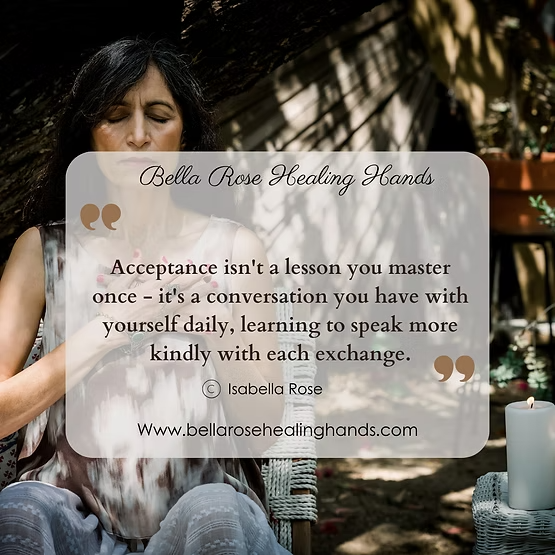
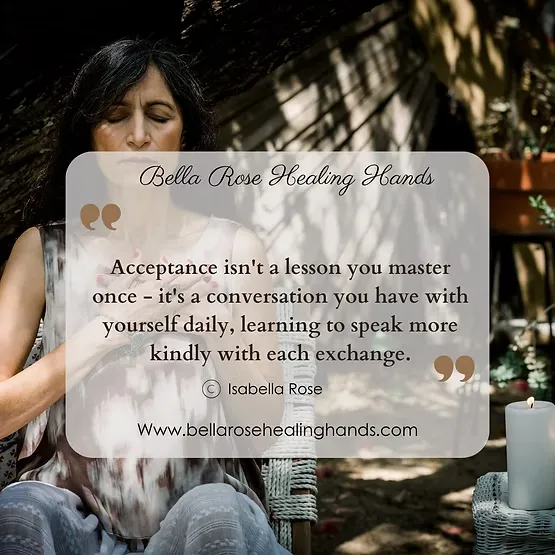
Woman meditating with eyes closed, hands on heart, seated outdoors. Text overlay: "Bella Rose Healing Hands" and a quote on acceptance.


Subscribe to our Mailing List
And that's just a peek at what we offer. Get more marketing tips straight to your inbox.
Stay Connected to the Magick!
Subscribe to the Discover the Magick Within newsletter and receive soulful inspiration, healing insights, and occasional exclusive discounts —
delivered straight to your inbox. Begin your journey toward self-love, transformation, and holistic healing.
Your privacy is respected, and your information is never shared.

Helping you reconnect with your inner wisdom, creative spirit, and the magick within.
Contact
Main
Resources
© Copyright 2026 Bella Rose Healing Hands. All Rights Reserved.