
Journaling Power: A Journey of Self-Discovery, Healing, and Learning to Listen Within Post
My Review of the 10th Anniversary Edition and an Interview with Mari L. McCarthy
Journaling has been part of my life for as long as I can remember. I started keeping a diary back in elementary school, recording the little happenings of everyday life. By junior high and high school, those diary entries had gradually evolved into something more meaningful. My diary had become a journal—a place where I could explore my thoughts, express my feelings, work through life's ups and downs, and begin discovering more about myself.
Over the years, journaling has continued to evolve alongside me, taking on different forms and serving different purposes through the many seasons of my life.
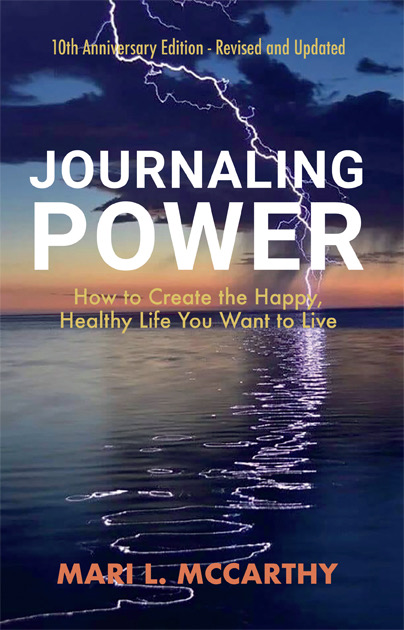
So, when I had the opportunity to read Journaling Power: How to Create the Happy, Healthy Life You Want to Live, the revised and updated 10th Anniversary Edition by Mari L. McCarthy, I was especially interested in discovering what new insights and inspiration it might bring to a practice that has been part of my life for so long.
I'm delighted to be participating in the WOW! Women on Writing blog tour celebrating the book's tenth anniversary. Today, I'm sharing my thoughts on the book, a glimpse into my journaling routine, and a special interview with Mari herself.
What makes Journaling Power particularly meaningful to me is Mari's personal story.
After being diagnosed with multiple sclerosis and losing much of the function in her dominant hand, Mari began learning to write with her left hand as a form of physical therapy. What began as a simple exercise eventually became something far more profound—a journey of emotional healing, self-discovery, and learning to reconnect with herself.
As someone whose life was dramatically changed by a near-fatal car accident, I found myself relating to Mari's experiences on a deeply personal level.
Living with chronic pain and physical limitations can change your relationship with your body. There can be frustration, grief, uncertainty, and the ongoing challenge of navigating a life that looks very different from the one you once knew.
One of the things I'm working toward in my own healing journey is learning to trust my body again and feel safe within it. That's why Mari's reflections on developing a more compassionate relationship with her body resonated with me.
Throughout Journaling Power, Mari encourages readers to look beyond the surface of their thoughts, question beliefs that may no longer serve them, quiet their inner critics, and approach themselves with greater curiosity and compassion.
Her approach reminds us that journaling is more than simply recording the events of our lives or releasing whatever happens to be on our minds. It's also an opportunity to listen to ourselves, recognize patterns, and discover what our thoughts and emotions may be trying to tell us.
And that's where I've found some of the book's greatest value.
The writing prompts have become one of my favorite parts of Journaling Power. Some are easy to answer, while others have really challenged me to dig deeper. There have been times when I've sat with a question, realizing that my first response barely scratched the surface.
I've read through Journaling Power, but now I'm going back through it at a much slower pace, taking the time to explore some of Mari's journaling prompts more deeply. I've even dedicated a notebook specifically to working through the exercises and recording my reflections.
Some prompts come easily, while others challenge me to look beyond my initial answers and dig a little deeper. I've discovered that sometimes the most meaningful insights come when I revisit a question, sit with it for a while, and allow myself to explore whatever comes to the surface.
That's one of the things I appreciate most about Journaling Power. It isn't simply a book you read once and put back on the shelf. It's a resource you can return to again and again, discovering something new about yourself along the way.
In fact, I've been incorporating Mari's prompts into my morning journaling routine.
I usually start my day with meditation and visualization, taking a little time to focus on my goals and the life I'm working toward creating. Afterward, I spend approximately ten minutes journaling.
It's a peaceful way to begin my morning, and the prompts from Journaling Power have encouraged me to approach that time with even greater curiosity.
My evening journaling practice serves a different purpose.
Before going to bed, I like to do what I call a brain dump, writing down whatever thoughts, worries, ideas, or unfinished business may be occupying my mind. It's similar to what Mari calls her Night Notes.
Afterward, I write down three things I'm grateful for, along with the day's victories.
Some of those victories involve my body and my ongoing healing journey. Living with chronic pain and disabilities, it's sometimes easy to focus on what I can't do or what I haven't yet accomplished. But I've been making a conscious effort to recognize the progress I am making, even when it comes in small steps.
Something that might seem insignificant to another person can be a meaningful accomplishment for me.
Writing down those moments helps me acknowledge my efforts, celebrate my progress, and continue rebuilding trust in my body.
I also enjoy Bible journaling, which gives me an opportunity to reflect on Scripture, deepen my faith, and nurture my spiritual connection.
Although each of these practices serves a different purpose, they all offer something I value: a chance to slow down, turn inward, and reconnect with myself.
And that's one of the messages I appreciate most about Mari's book.
Journaling doesn't have to look the same for everyone. It can evolve as we evolve, meeting us wherever we happen to be in life.
Whether we're exploring difficult emotions, questioning old beliefs, celebrating personal victories, or simply taking a few quiet moments for ourselves, the page offers a place to do so without judgment.
For its thoughtful guidance, practical exercises, and deeply personal approach, I'm giving Journaling Power five stars.
Disclosure: I received a complimentary copy of Journaling Power in exchange for my honest review. All opinions expressed are my own.
A Conversation with Mari L. McCarthy
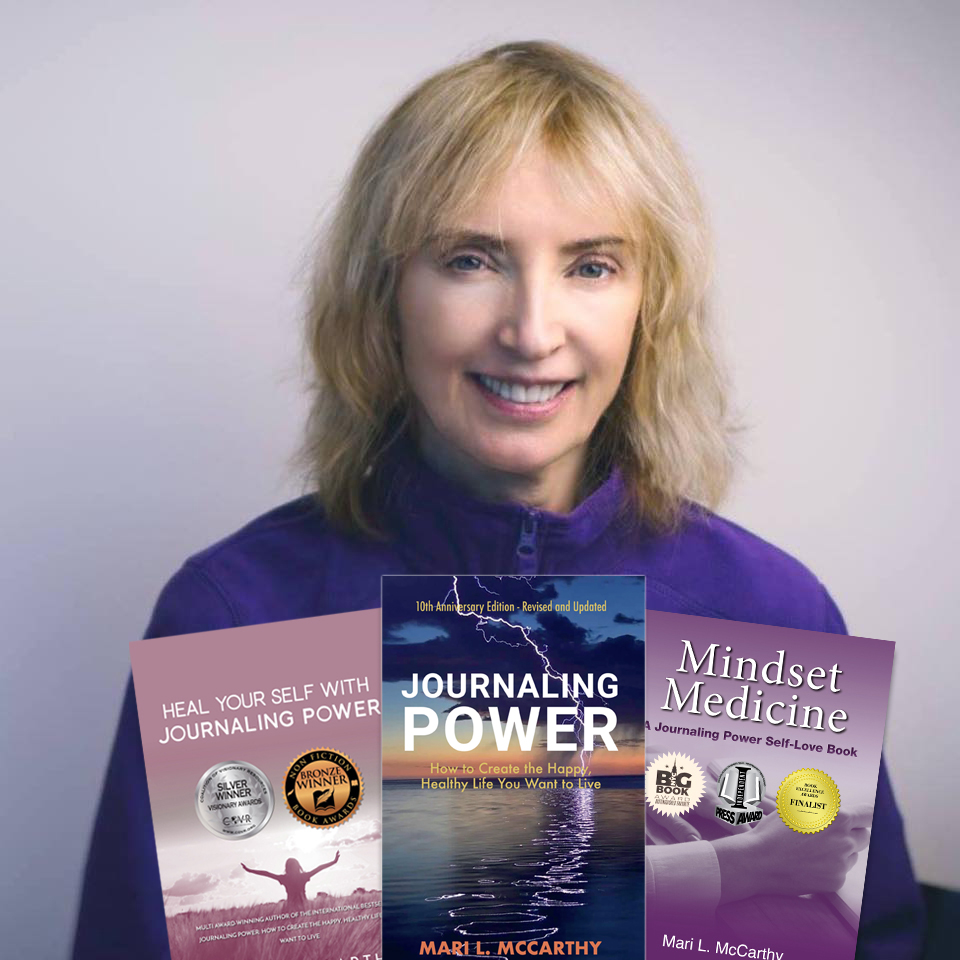
One of the highlights of participating in this blog tour was having the opportunity to interview Mari.
Given my own experiences with disability, chronic pain, and navigating the healthcare system, I was especially interested in learning more about how journaling helped Mari transform her relationship with her body, find her voice, and discover possibilities she might never have imagined.
I'm delighted to share our conversation with you.
1. You originally began journaling almost as a form of physical therapy, learning to write with your left hand. When did you first realize that something much deeper than writing was happening?
I realized it about two- or three-weeks in. I had started my journaling practice with Julia Cameron’s Morning Pages and the stream-of-consciousness approach felt like it was opening a door to something much deeper. As I wrote without censoring or judging what came out, I started to connect with feelings (!) and to remember childhood experiences. I discovered there was more to me than just my overthinking brain —that there was this inner universe waiting to be explored. I was excited, scared and curious to embark on my metaphysical journey.
2. You write about going from feeling that your body had betrayed you to developing a much more compassionate relationship with it. What helped you make that shift, and what would you say to someone who is still struggling to trust their body?
Making journaling a daily practice helped me reconnect and stay connected to my body rather than seeing it as something separate from me. It gave me a space to listen to what I was feeling, notice what my body was asking for, and gradually replace judgment with curiosity and compassion. I think that trust came less from suddenly loving my body and more from learning to listen to it. I had many discussions with my body and asked her a lot of questions and free wrote her responses. I created a journaling power workbook, Love Your Body In 28 Days to show people how to reconnect with and develop a compassionate relationship with their body.
3. You describe journaling as helping you become an advocate for your own healthcare. How can someone use a journal to find their voice when they feel unheard or powerless within the healthcare system?
For me, journaling is a way of turning an overwhelming healthcare experience into something you can understand and communicate. When you feel unheard or powerless, it’s easy to leave an appointment thinking, “I wish I had said this,” or to forget important details because there was so much happening at once.
A journal gives you a place to document your symptoms, questions, concerns, how treatments are affecting you, and what you want from your healthcare resources. But I think its deeper value is helping you identify your own voice. As you reclaim your power and confidence through a consistent journaling conversation, you change your relationship with your healthcare providers and it becomes less parent-child to more adult-adult. I’ve also created a Whole Health Journaling Challenge to guide you in becoming your own Healthcare Advocate.
4. For someone living with chronic illness or disability who doesn't have the energy or physical ability to write three Morning Pages every day, how would you adapt your practice?
Do whatever works for you. The important thing is that you show up consistently, that you make journaling part of your daily health routine like brushing your teeth, washing your face, drinking your water. A few words, a few sentences, doodling, or even journaling in your mind’s eye counts. Let your heart be your guide.
5. You've been journaling for decades now. What has surprised you most about the person you've discovered on the page?
What has surprised me most is discovering that there’s so much more to me than I ever imagined. One of the greatest surprises has been recognizing my own resilience.
There are entries written in moments when I felt lost, uncertain, or completely depleted. Reading them now, I’m struck by the fact that even in those moments, some part of me kept going—kept questioning, kept imagining, kept searching for a way out and forward.
6. You eventually followed another unexpected creative calling and learned to sing. What did journaling teach you about giving yourself permission to pursue something simply because it brings you joy?
Journaling taught me that I don’t always need a practical reason or a clear outcome to pursue something. Sometimes joy itself is a valid reason. Learning to sing reminded me that I could give myself permission to be a beginner, to explore something simply because it lit me up, without needing to justify it as productive or purposeful. It helped me see creativity (yes, I discovered I really had some!) was not just something I do for an end result, but as something that makes me feel more alive.
7. This is the revised and updated 10th Anniversary Edition. What do you understand about journaling, healing, and yourself today that you didn't understand when you wrote the original edition?
Ten years later, I understand that healing is not about fixing myself or reaching some final destination; it is about continuing to meet myself with honesty, compassion, and curiosity as I grow and transform.
I also understand myself differently. I’ve learned that I don’t have to have everything figured out before I can move forward, and that the parts of myself I once wanted to change or silence often have something important to teach me.
8. If someone reading this blog has never journaled before and is sitting in front of a blank page tonight, what is the one question you would invite them to write at the top of that page?
I would invite them to write a positive question like:
“What did I learn today?” or “What was the best part of today?”
9. Before we close, is there anything else you’d like to share with my readers about your journey, your work, or the power of journaling?
I’d say that journaling is ultimately an invitation to slow down and listen to yourself. Our lives can move so quickly that we don’t always have the opportunity to process what we’re experiencing, what we’re learning, or what we truly want. Putting those thoughts onto paper creates a space for honesty, reflection, and healing.
My own journey has taught me that you don’t have to have everything figured out before you begin. The page can be a place to ask questions, explore possibilities, celebrate progress, and make sense of the difficult seasons as well as the enjoyable ones.
I created an introductory 14 day course workbook, Start A Healing Journaling Power Practice Today! available at CreateWriteNow.com You don’t have to do the days in order. My recommendation is to read through the workbook and start with the chapter or exercise that speaks to you and then just #WriteON! If you need some ideas for starting a journaling session, CreateWriteNow.com has over 300 journaling power prompts.
About Mari L. McCarthy
Mari L. McCarthy is the founder and Chief Empowerment Officer of Create Write Now, where she teaches people how to use Journaling For The Health Of It™ for self-discovery, personal growth, and emotional well-being.
Her own journaling journey began while navigating the challenges of multiple sclerosis. What started as an exercise in learning to write with her nondominant hand became a transformative practice that inspired her to share the power of journaling with others.
Mari is the award-winning author of Journaling Power, Heal Your Self with Journaling Power, and Mindset Medicine. She has also created more than twenty journaling workbooks and numerous resources designed to help people develop meaningful journaling practices.
You can learn more about Mari, explore her journaling resources, and find a free journaling workbook at CreateWriteNow.com.
Discover Journaling Power
Journaling Power: How to Create the Happy, Healthy Life You Want to Live, 10th Anniversary Edition, Revised and Updated, is available through Amazon and BookBaby. You can also add it to your Goodreads reading list.
Affiliate Disclosure: As an Amazon Associate, I earn from qualifying purchases. If you purchase Journaling Power through my Amazon affiliate link, I may receive a small commission at no additional cost to you. Thank you for supporting Discover the Magick Within!
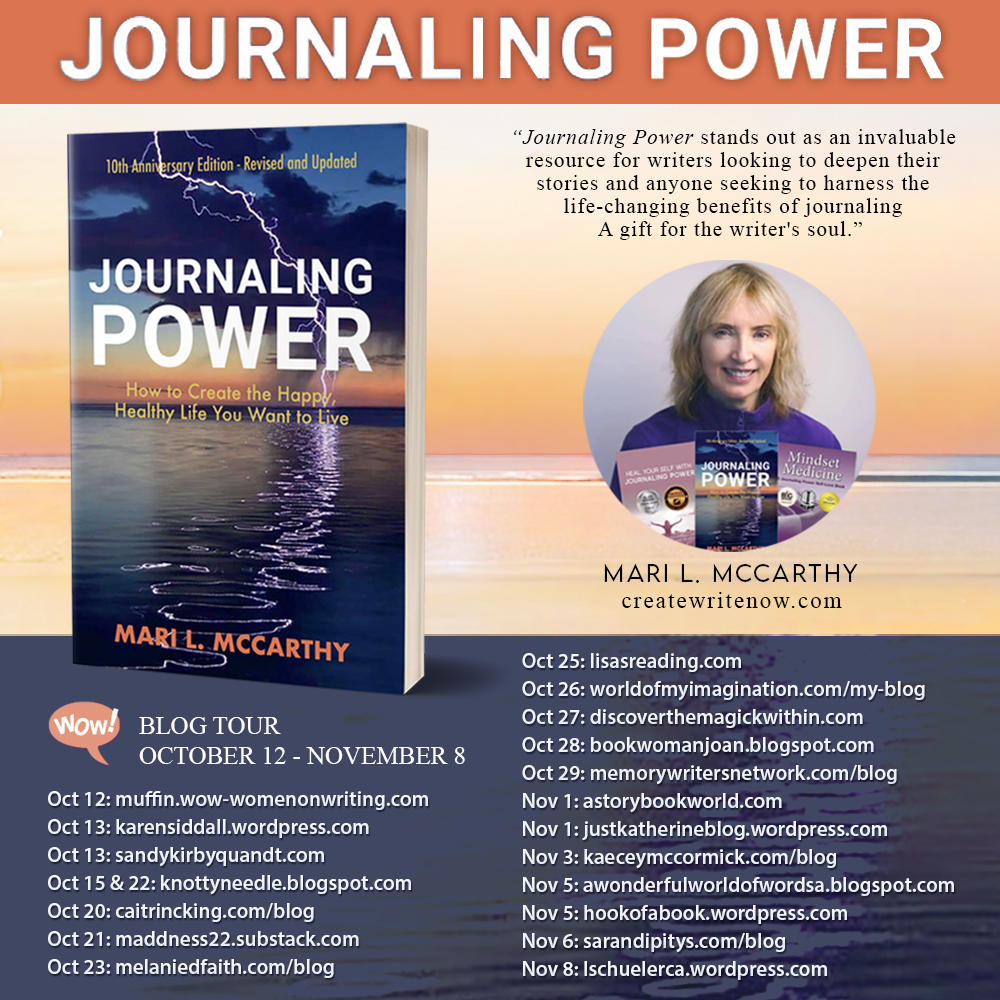
As part of the WOW! Women on Writing anniversary celebration, I'm joining fellow bloggers in sharing Mari's work and exploring the many ways journaling can enrich our lives.
Whether you've been journaling since childhood or have never written a single entry, I hope Mari's story encourages you to pick up a pen and discover what the pages might reveal.
Perhaps you'll begin with one of the questions Mari suggested during our interview:
What was the best part of today?
Sometimes, one simple question is all it takes to begin a meaningful conversation with ourselves.
Thank you, Mari, for sharing your story, your wisdom, and your thoughtful responses to my questions. Congratulations on the tenth anniversary of Journaling Power!
